Mobile aesthetics

From 2019 to 2024, I explored the impact of mobile technologies on film, photography, digital design, and small-scale architecture, focusing on how smartphones, apps, and mobile-first platforms reshape aesthetic conventions and artistic production. This research culminated in my doctoral dissertation, New Horizons of Visuality: Aesthetics in the Mobile Era, which I defended in 2024 at the Polish-Japanese Academy of Computer Technology in Warsaw, Faculty of New Media Art. An integral part of the dissertation is the multimedia installation PHENUMA, which consists of video, collage, and a series of digital graphics that visually present its key concepts.

The research employed a creative methodology, merging artistic practice with theoretical exploration to analyze the evolving aesthetics of mobile and online platforms. This interdisciplinary approach integrates art-based research, netnography, interviews, comparative visual analysis, and a self-developed medium specificity tool to better understand contemporary digital creativity.

Through both artistic and theoretical perspectives, the dissertation:

  • Identifies distinctive characteristics of mobile-generated media, such as instantaneity, ephemerality, and adaptivity.
  • Examines emerging digital art forms, including app art, GPS-based art, digital graffiti, and filter art.
  • Analyzes the platformization of art, revealing how Instagram, TikTok, and Snapchat redefine visual storytelling, aesthetics, and audience interaction.
  • Investigates how mobile aesthetics extend beyond screens, influencing spatial design, architecture, and contemporary cultural landscapes.

As a result, the following multifaceted, intersecting features of mobile-specific multimedia have been identified:

  • Mobility is undoubtedly a key characteristic. The artworks not only move with the user but are also created, processed, and distributed through hand and finger movements, intertwined with device sensors like gyroscopes or accelerators that can simulate gravity.
  • Instantaneity is another defining feature, with mobile devices’ constant “readiness” allowing for spontaneous, immediate access to and creation of the artwork, including app art.
  • Embodiment in mobile-specific art is significant compared to Internet art or digital art. Mobile-based artworks are multimodal, engaging all senses, including proprioception and touch, mediated only by the screen surface. They are often created based on body movement and the use of built-in sensors.
  • Adaptativity is highlighted by mobile sensors, allowing artworks to adjust to environmental conditions like lighting and perspective, enhancing the authenticity of spatial illusions.
  • Penetrability — due to minimal framing and built-in sensors, mobile artworks are permeabilized, creating the illusion of blending digital content seamlessly with physical space, enhancing immersion and telepresence.
  • Ubiquity is reflected in the widespread availability and use of mobile devices, which makes multimedia content including app art accessible at all times — and everywhere.
  • Ephemerality is also more visible in mobile-specific artworks, emphasizing the transient nature of these particular digital creations.
  • Hyperbolization is typically used in mobile-specific creations, such as filters, masks, or multimodal experiences, that enhance some aspects of the physical world.

The identified mobile aesthetic’s characteristics should not only coexist among themselves but also align with the traits of new or digital media as established in the seminal works of de Kerckhove, W.J. Mitchell, Weibel, Paul, Manovich, and Belting [8]-[13]. These encompass scalability, modularity, numerical representation, transcoding, flexibility, automation, reproducibility, hybridity, virtuality, generativity, interconnectivity, and various other dynamic qualities. Bridging these traits with the medium specificity perspective, which emerged in the mid-20th century at the confluence of art theory and film studies, provided a robust framework for analyzing the collected data. This analytical lens, notably advanced by Marshall McLuhan’s medium theory [14], allowed for a nuanced understanding of how mobile aesthetics integrates and extends established digital media characteristics.

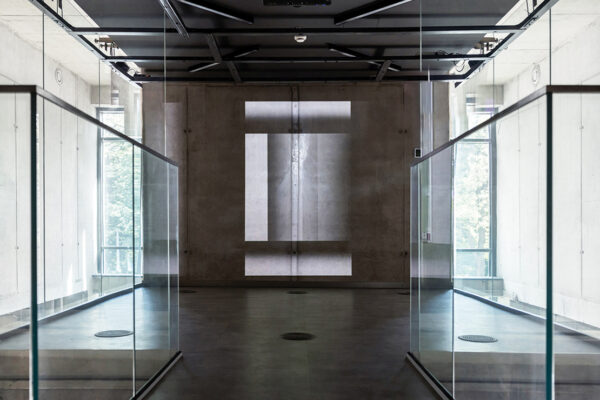
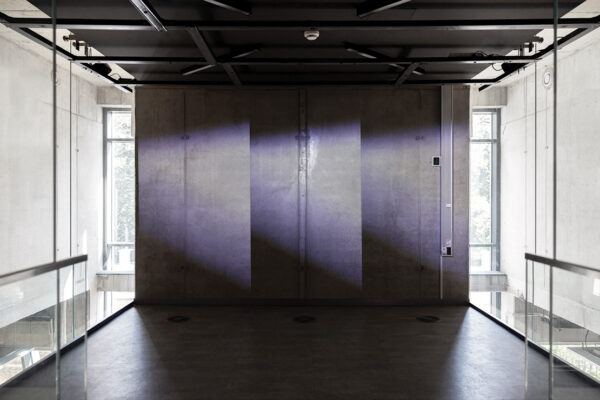
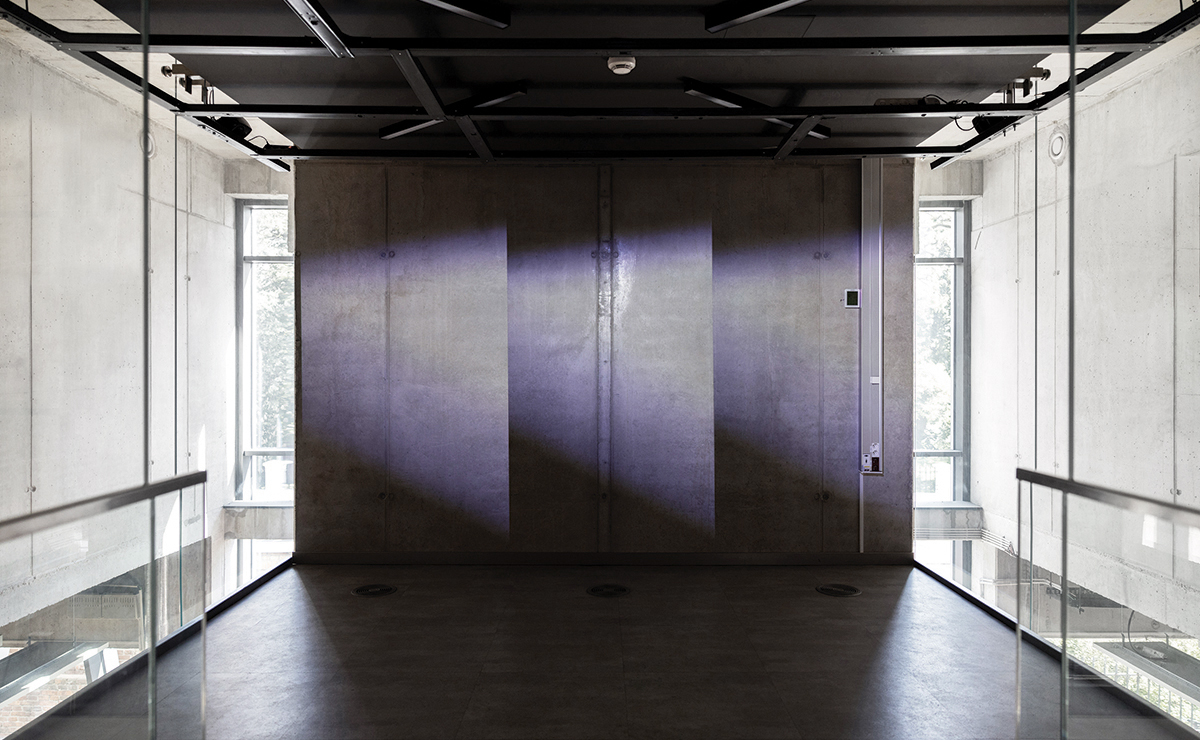
Integral part of the doctoral thesis is art of my doctoral research and dissertation is multimedia installation PHENUMA. The title is a combination of the Greek words “phenomenon” and “numa” (divine spirit), which reflects the main theme of the presented artworks: a visual reflection on the essence of images in the era of mobile technologies, their unique language and aesthetics. The main part of the installation is video Transcience 2.0, large-scale collage Phenuma and series of digital graphics and shorts. Its goal is to prompt reflection on the impact of mobile technologies on the reception of art and perception of reality.

Looking for more?

Go to my AI aesthetics project here.

Read my Contemporary Lynx article introducing main findings from the doctoral research:

Filtered realities: How mobile technologies have changed visual culture and landscape. Contemporary Lynx (online), December 4th, 2023

More articles on mobile culture:

10 culture-oriented apps, that are worth installing on your phone in 2021, Contemporary Lynx (online), July 7th, 2021
Less is more. Artistic mobile games, Contemporary Lynx (online), July 1st 2020
App art and new media: how mobile apps have captured artists’ imagination, Contemporary Lynx (online), July 21st 2018
Art in Your Pocket. Museums in your smartphone – how the modern, mobile phone-driven society can access works of art, Contemporary Lynx (online), May 26th, 2018

References

[1] M. Halpern and L. Humphreys, “iPhoneography as an emergent art world,” Sage Journal, 2014. [Online]. Available: https://doi.org/10.1177/14614448145386
[2] L. Manovich et al., “Investigating the Style of Self-Portraits (Selfies) in Five Cities Across the World,” 2014. [Online]. Available: http://www.selfiecity.net
[3] L. Manovich, “Instagram and contemporary image,” 2015. [Online]. Available: http://manovich.net/index.php/projects/instagram-and-contemporary-image
[4] E. A. Sheffer, “Examination of an internet copy machine,” @INSTA_REPEAT, 2018. [Online]. Available: https://emmasheffer.com/index.php/curations/curations/
[5] E. Serafinelli, Digital Life on Instagram: New Social Communication of Photography, Emerald Publishing Limited, 2018.
[6] T. Leaver, T. Highfield, and C. Abidin, Instagram: Visual Social Media Cultures, Cambridge, UK: Polity Press, 2019.
[7] P. X. Nguyen et al., “The Open World of Micro-Videos,” arXiv:1603.09439v2 [cs.CV], Apr. 1, 2016.
[8] D. De Kerckhove, “The Digital Imperative,” 1996. [Online]. Available: https://v2.nl/archive/articles/the-digital-imperative
[9] W. J. T. Mitchell, Image Science: Iconology, Visual Culture, and Media Aesthetics, Chicago, IL, USA: University of Chicago Press, 2015.
[10] P. Weibel, “On the History and Aesthetics of the Digital Image,” in Ars Electronica 84, 1999.
[11] L. Manovich, The Language of New Media, Cambridge, MA, USA: The MIT Press, 2001.
[12] C. Paul, Digital Art, London, UK: Thames & Hudson, 2003.
[13] H. Belting, “Image, Medium, Body: A New Approach to Iconology,” Critical Inquiry, vol. 31, no. 2, pp. 302-319, Winter 2005.
[14] M. McLuhan, “Understanding Media: The Extensions of Man”, New York, NY, USA: McGraw-Hill, 1964.